
Every Day I Write the Book: Reach Me, reviewed.
Chris Klimek

Kevin Connelly & Tom Berenger arrange one of those popular public readings of self-help books.
It's no Jack Reacher, this star-studded, tone-deaf ensemble drama. Reviewed for The Dissolve.
Use the form on the right to contact us.
You can edit the text in this area, and change where the contact form on the right submits to, by entering edit mode using the modes on the bottom right.
123 Street Avenue, City Town, 99999
(123) 555-6789
email@address.com
You can set your address, phone number, email and site description in the settings tab.
Link to read me page with more information.
search for me
Filtering by Category: movies
Kevin Connelly & Tom Berenger arrange one of those popular public readings of self-help books.
It's no Jack Reacher, this star-studded, tone-deaf ensemble drama. Reviewed for The Dissolve.
Kip Thorne on the set of Interstellar. (Paramount/Warner Bros./Legendary Pictures)
For my day job at Air & Space / Smithsonian, I interviewed Kip Thorne, the theoretical physicist who with his friend the movie producer Lynda Obst, conceived the film Interstellar back in 2006. Thorne remained closely involved with the picture throughout its writing, production, and editing, and has now published a 324-page companion to the film called The Science of "Interstellar" laying out his scientific rationalization for every aspect of its story -- even the Love Tesseract Wormhole.
DUH: Don't read this interview if you intend to see Interstellar but haven't yet.
And if that's your situation, and you live anywhere in the Washington, DC diaspora, make sure to catch the movie in 70mm IMAX at either the National Air & Space Museum downtown or at the Steven F. Udvar-Hazy Center out by Dulles International Airport. I've seen it both this way and in digital IMAX, and the 70mm presentation is more painterly and majestic. It also sounds better, curiously. The muddy sound mix we talked about on Pop Culture Happy Hour last week (based on a digital IMAX screening in Silver Spring, Maryland) was not a problem when I saw the film again at NASM in 70mm.
Jack Nicholson in Mike Nichols' Wolf in 1994. Wolves is not as good.
I wish I could report that Wolves, the silly horror film I review for The Dissolve this week, is an ante-upping James Cameron sequel to Wolf, the Mike Nichols-Elaine May-Jack Nicholson-Michelle Pfeiffer-James Spader expose of lycanthropy in the publishing industry from 20 years ago I'd vaguely wanted to revisit even before this Grantland exegesis ran last summer.
It is not.
I was happy as always to be the fourth crewmember on this week’s Pop Culture Happy Hour, wherein regular panelists Linda Holmes, Stephen Thompson, and Glen Weldon discuss Christopher Nolan’s thrilling (to me, anyway) sci-fi opus Interstellar. We also talk about some of the other films that’ve angled for a plausible approach to sending our species beyond what the early rocket scientist Konstantin Tsiolkovsky called “the cradle of humanity.”
Read MoreMatthew McConaughey in Interstellar
My NPR review of Interstellar, a grand spacefaring epic I saw twice in three days and in which I am inclined to forgive many flaws. I Want to Believe, even if there's a lot of it I just don't.
"Passion without pressure" is how Roger Moore describes the kissing technique he says in his (second) memoir that Lana Turner taught him in 1956, a century or so before he replaced Sean Connery as 007. Gross. This poor girl. Gross.
Roger Moore was 45 when he made his first debut as James Bond -- older than Sean Connery, who’d played the role in five films before he got fed up and abdicated, then was coaxed back and quit a second time – and approximately 110 by the last the last of his seven appearances as 007 12 years later. On the DVD extras for Live and Let Die, his 1973 debut as the superspy he and no one else refers to as “Jimmy” Bond, Moore tellingly bemoans the “30 minutes of daily swimming” he endured to develop the not-particularly-athletic physique he displays in the movie. In the three Bonds he made in the 80s, he rarely looked hale enough to survive a tryst with one of his decades-younger leading ladies, much less a dustup with punch-pulling henchpersons like Tee Hee or Jaws or May Day.
Such was the strength of the Bond brand: Audiences would buy that this guy, who looked and acted like the world’s most condescending game show host, was an elite assassin, as long as he looked good in a tuxedo. Which just happened to be Moore’s primary, not to say only, skill.
To his credit, Moore was aware of his limitations in the part, and in general. This ingrained self-deprecation is present even in the title of his new, low-impact memoir, One Lucky Bastard (which I review in Sunday's Washington Post), wherein Mr. I Hate Swimming, sorry, that’s Sir I Hate Swimming, now, allows that current Bond Daniel Craig -- the most chiseled man to play the part, in concordance with our unforgiving expectations of 21st-century action heroes, but also the best actor, too -- “ looks as though he could actually kill, whereas I just hugged or bored them to death.”
One thing I loved about writing this review is that it meant my best gal Rachel Manteuffel and I were both trying to get references to cunnilingus through the Post's Standards & Practices Dept. at the same time. You'll have to wait another week to read her story, but see to it that you do. It's funny and insightful and honest, like everything she writes, and very, very sexy.
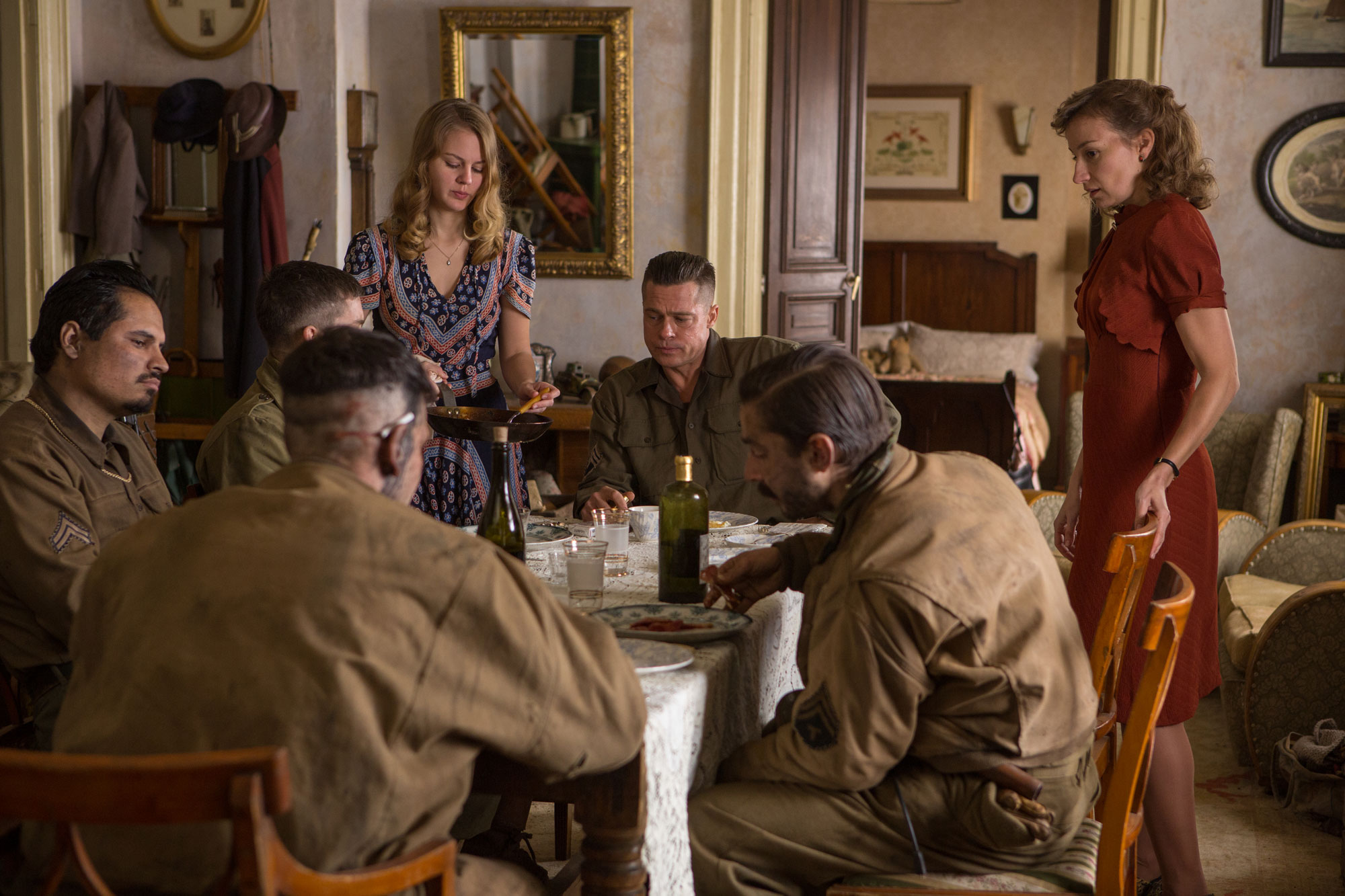
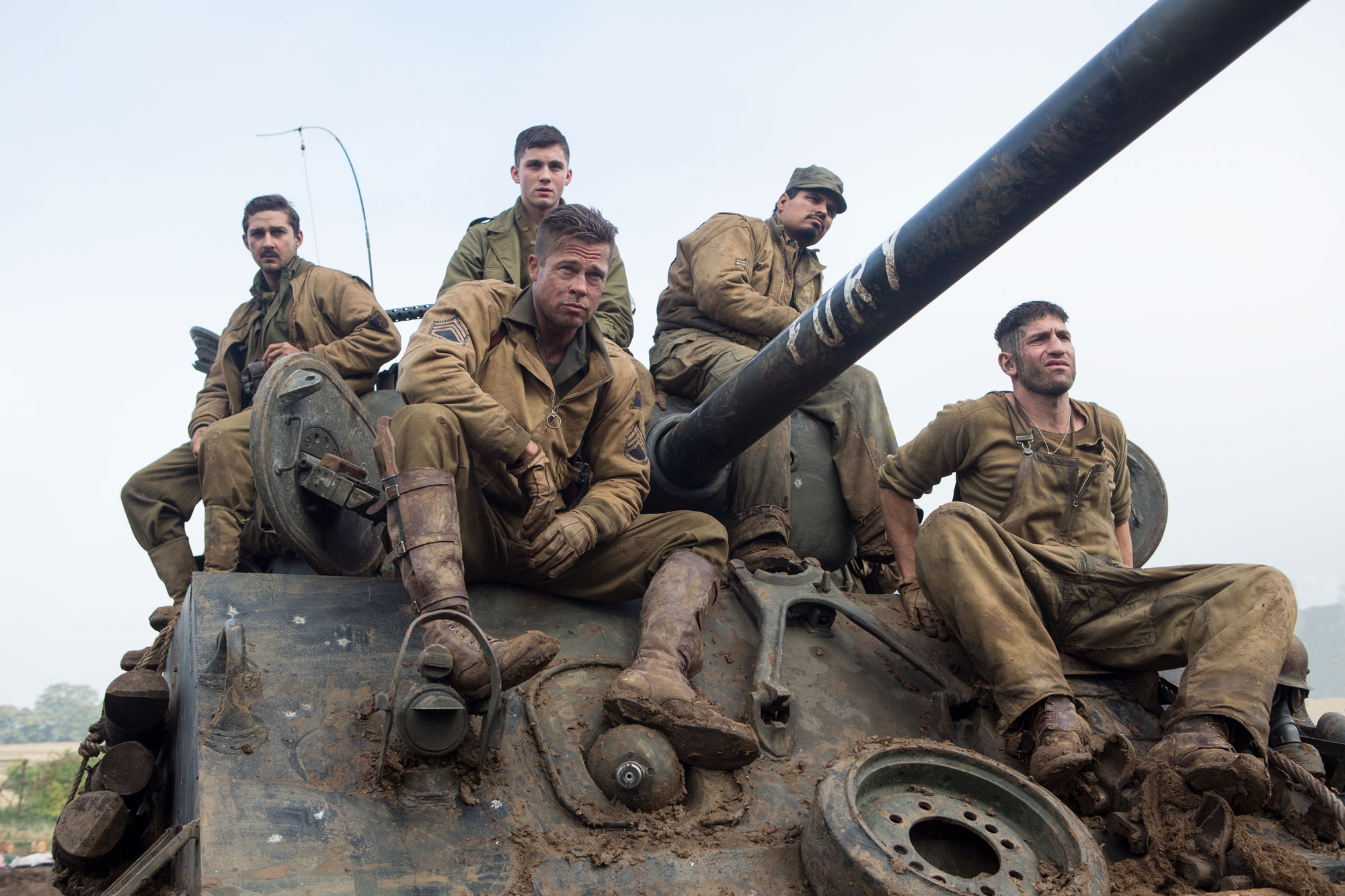
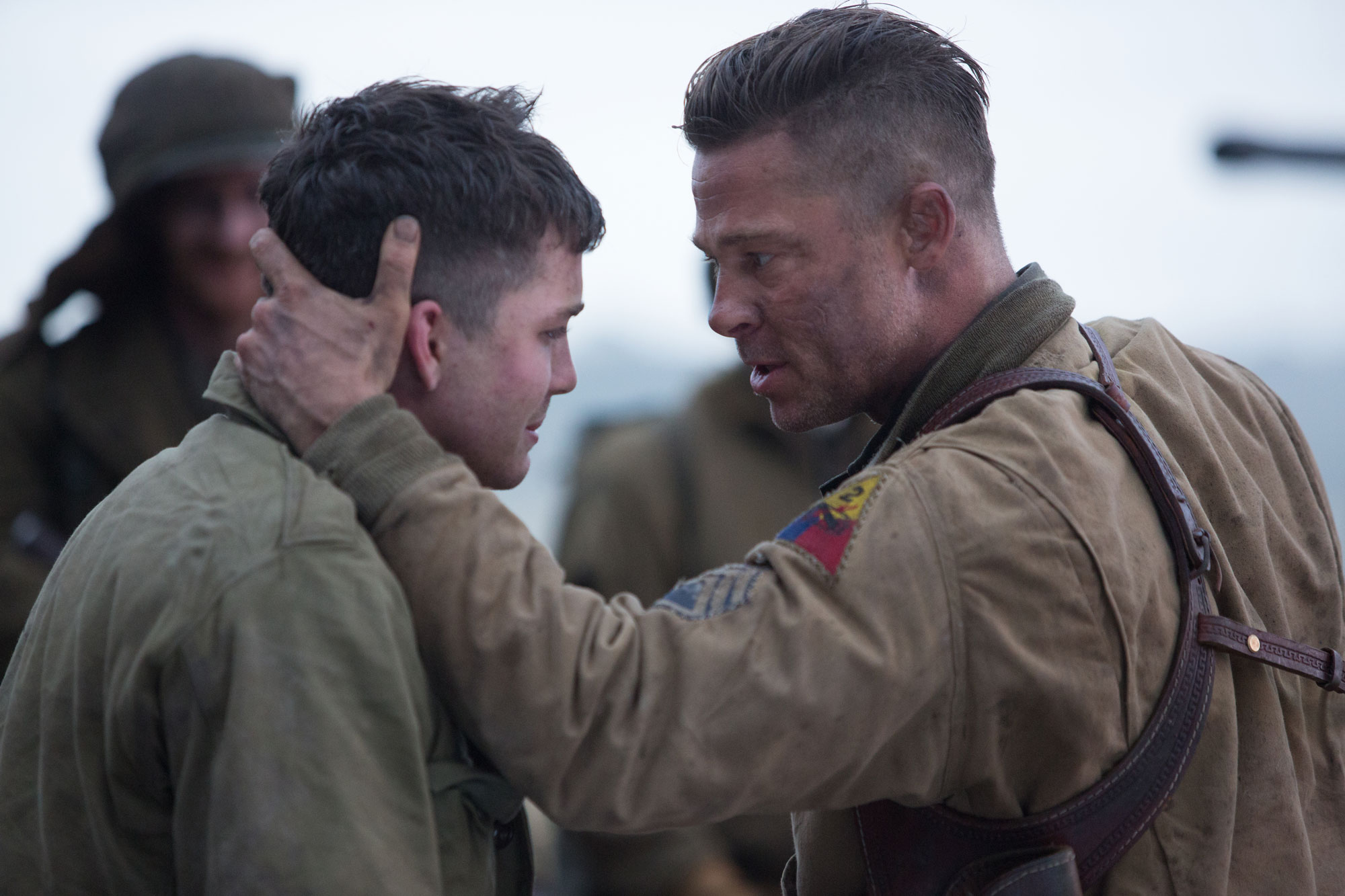
I expected that David Ayer, the writer of Training Day and the writer-director of End of Watch and Sabotage, would make a gritty World War II combat picture. But I was surprised how much an interest his film takes in the plight of women, and its willingness to show American soldiers behaving badly during the "Good War." My NPR review is here.
Neil Leifer's iconic photograph captured the aftermath of the controversial "phantom punch" with which Ali felled Sonny Liston for the second and final time, in 1965.
Muhammad Ali is already the subject of many, many fine books and films. The distinguishing feature of the new documentary I Am Ali, which I reviewed for NPR today, is that filmmaker Clare Lewins was given permission to use never-before-released private tapes that Ali made of his conversations with his daughters and close confidants for his own enjoyment.
As someone who has listened to all 537 episodes of This American Life, many of them more than once and some of them more than twice, and who has annoyed my parents, brother, friends, and girlfriends by recording lengthy interviews with them on various occasions, this approach strikes a chord with me. The recorded voice of someone speaking to one other person will always feel more intimate than a close-up photograph ever could – to me, at least.The excerpts Lewins uses mostly date from the late 70s, by which time Ali, having reached his mid-30s, had slowed down and was getting hit more than he ever had in his twenties. He also started to exhibit symptoms of the Parkinson’s syndrome with which he would finally be diagnosed in 1984.
With so much strong Ali scholarship in the world already, I Am Ali can muster only slight contributions to the canon, but it’s a well-made and inspiring tribute to The Greatest if you're looking for an all-in-one Ali doc. Like I said in my review, the best Ali documentaries have tended to zoom in on a single fight or era of his life. What I happened to learn from this one is how Ali came to pose as St. Sebastian for the April 1968 issue of Esquire.
Muhammad Ali had to get Elijah Muhammad's permission to "dress up" as a Christian for this photo shoot.


